

Introduction
For fishing tackle brands and importers, sourcing CNC fishing reels involves more than choosing an attractive aluminum reel body.
Two reels described as CNC-machined can differ substantially in their manufacturing methods, materials, frame construction, internal gearing, drag systems, and production costs.
Understanding these differences helps buyers select suitable reel platforms, evaluate OEM customization options, and compare manufacturers more effectively.
At WH Fishing, our CNC reel range covers spinning, baitcasting, conventional and jigging, and fly fishing reels. This guide uses actual manufacturing processes and product examples to explain what buyers should consider before developing a private-label CNC reel line.

Key Takeaways for OEM Buyers
- CNC does not always mean fully CNC-machined. Confirm which components are machined and how the complete reel is constructed.
- Material selection matters. 6061 and 7075 aluminum have different properties, costs, and applications.
- CNC manufacturing costs depend on more than material prices. Machining time, component complexity, finishing, and production quantities all affect quotations.
- Existing reel platforms can simplify OEM development. Branding and compatible component changes are generally more straightforward than redesigning mechanical systems.
- Evaluate the finished reel, not just the frame. Gears, bearings, drag systems, assembly, and quality control are equally important.
1. What Is a CNC Fishing Reel?
A CNC fishing reel is a fishing reel containing components manufactured through Computer Numerical Control (CNC) machining.
CNC machining is a subtractive manufacturing process. Computer-controlled cutting tools remove material from a metal workpiece according to programmed instructions to produce the required component geometry.
Depending on the reel design, CNC machining may be used for:
- Reel frames and bodies
- Side plates and structural components
- Spools and spool-related parts
- Handles and handle arms
- Selected gears and mechanical components
- Bearing seats and precision mounting interfaces
However, a reel marketed as CNC-machined is not necessarily manufactured entirely through CNC machining.
Some reels use CNC-machined spools or handles with bodies produced through other manufacturing processes. Others feature solid CNC-machined frames and multiple precision-machined metal components.
For OEM buyers, the important questions are:
Which parts are CNC-machined? What materials are used? How are the components assembled? And what performance requirements has the finished reel been designed to meet?
These questions provide a more reliable basis for evaluating reel quality than the CNC label alone.
2. Four Main Types of CNC Fishing Reels
CNC machining is used across several fishing reel categories, but each type has different structural requirements and target applications.
| Reel Type | Main Applications | Key OEM Sourcing Considerations |
|---|---|---|
| CNC Spinning Reels | Freshwater and saltwater spinning | Reel size, line capacity, gear construction, drag system, corrosion protection |
| CNC Baitcasting Reels | Lure fishing and precision casting | Frame weight, spool design, braking system, gear ratio, component alignment |
| CNC Conventional & Jigging Reels | Offshore fishing, vertical jigging, slow-pitch jigging | Frame structure, gearing, drag performance, handle leverage, line capacity |
| CNC Fly Reels | Freshwater and saltwater fly fishing | Line-weight compatibility, arbor size, spool capacity, reel weight, drag configuration |
2.1 CNC Spinning Reels: WHCS Series
CNC spinning reels are commonly selected for premium product ranges where metal construction, precise component alignment, and distinctive appearance are important.
The frame and body structure support the internal gearing and other mechanical components. Their design and manufacturing accuracy can influence assembly consistency and mechanical alignment.
However, overall reel performance also depends on gear materials, bearings, drag construction, spool design, and finishing quality.
WH Fishing Manufacturing Example: WHCS CNC Full Metal Spinning Reel
The WHCS series includes five sizes: WHCS30, WHCS40, WHCS50, WHCS60, and WHCS70.
This provides buyers with an existing CNC spinning reel platform covering different size and application requirements.
For a fishing brand, the sourcing decision should begin with the intended market:
- Which reel sizes match the target fishing application?
- What line capacity and drag characteristics are required?
- Is the product intended for freshwater or saltwater use?
- What handle, spool, appearance, and packaging options are appropriate?
- What order quantity and production schedule are commercially practical?
A larger reel is not automatically a better reel. Size, weight, mechanical configuration, and intended use must be considered together.
Using an established product platform allows buyers to evaluate the reel's existing construction before deciding whether additional OEM customization is necessary.
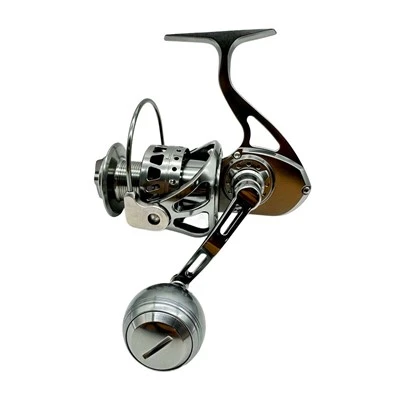
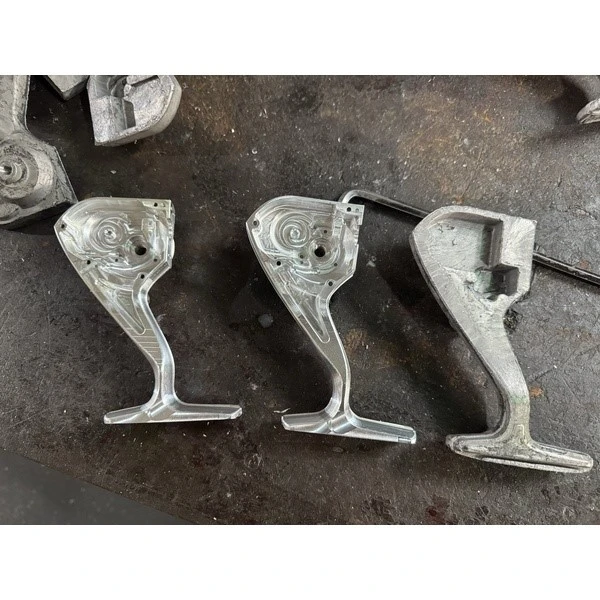
Explore the WHCS CNC Full Metal Spinning Reel
2.2 CNC Baitcasting Reels: CK100 and CK132
CNC baitcasting reels require careful coordination between the frame, spool, braking system, gears, bearings, and handle assembly.
The main frame provides the structural foundation for these components.

CNC machining allows manufacturers to create precise bearing locations, mounting interfaces, internal cavities, and external frame geometries.
Nevertheless, casting performance depends on the complete spool and braking system rather than the CNC frame alone.
WH Fishing Manufacturing Example: CK100 and CK132
WH Fishing's CK series includes two CNC baitcasting reel models with different weights, gear-ratio options, and drag specifications.
| Specification | CK100 | CK132 |
|---|---|---|
| Reel Weight | 135 g | 150 g |
| Maximum Drag | 2.5 kg | 3.5 kg |
| Gear Ratios | 6.2:1 / 7.1:1 / 8.1:1 | 6.6:1 / 7.3:1 / 8.1:1 |
| Line Retrieval | 55 / 65 / 73 cm | 65 / 75 / 80 cm |
| Main Frame | Precision-machined solid aluminum | Precision-machined solid aluminum |
Specifications refer to the listed CK configurations. Actual OEM options must be confirmed for the selected model.
The CK100 and CK132 demonstrate why buyers should compare complete reel specifications instead of focusing only on the CNC manufacturing process.
For example, a brand developing a lightweight baitcasting range may prioritize reel weight, ergonomics, spool behavior, and suitable retrieval speed.
Another brand may place greater emphasis on drag requirements, line capacity, and the intended fishing application.
The correct platform depends on the target product rather than one specification in isolation.
CNC Frame Customization
CNC machining can also support selected changes to external frame appearance, including cutout patterns and decorative structural details.
Such changes may be implemented through revised engineering drawings and CNC machining programs.
However, critical mounting dimensions, bearing alignment, and structural requirements must remain within acceptable design limits.
Changing the external appearance does not mean that every internal mechanical configuration can be modified without further engineering.

Explore the CK CNC Baitcasting Reel Series:
2.3 CNC Conventional and Jigging Reels
CNC machining is also used in conventional and jigging reels, including models developed for offshore and vertical fishing applications.
These products can have different mechanical priorities from spinning or baitcasting reels.

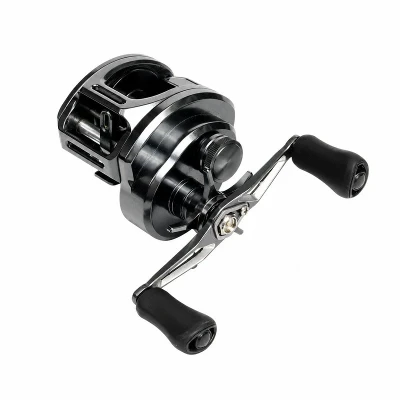
Depending on the application, buyers may need to evaluate:
- Frame structure under operating loads
- Gear materials and gear ratios
- Drag-system construction and consistency
- Spool capacity
- Handle length and leverage
- Corrosion-resistant components
- Maintenance and replacement-part requirements
For slow-pitch jigging, retrieval characteristics and mechanical feel can be particularly important.
For larger conventional reels, buyers may place greater emphasis on line capacity, operating loads, and suitable drivetrain construction.
CNC machining can provide precise structural components, but it does not independently determine the finished reel's strength or drag performance.
These characteristics must be evaluated through the complete mechanical design.
Explore WH Fishing's relevant reel platforms:
2.4 CNC Fly Reels
CNC machining is widely used for aluminum fly reel frames and spools.
It allows manufacturers to create precise geometries, decorative cutouts, and distinctive surface finishes.
For fly fishing brands, important specifications include:
- Intended fly-line weight
- Arbor size
- Spool capacity and backing requirements
- Reel weight
- Drag-system configuration
- Frame and spool construction
- Surface treatment
- Compatible spare components
WH Fishing offers CNC fly reel platforms covering different line-weight categories.
For OEM buyers, selecting the correct size and mechanical configuration should come before deciding on cosmetic customization.
It is also important to distinguish CNC-machined fly reels from die-cast alternatives, as both manufacturing methods are used in the market.
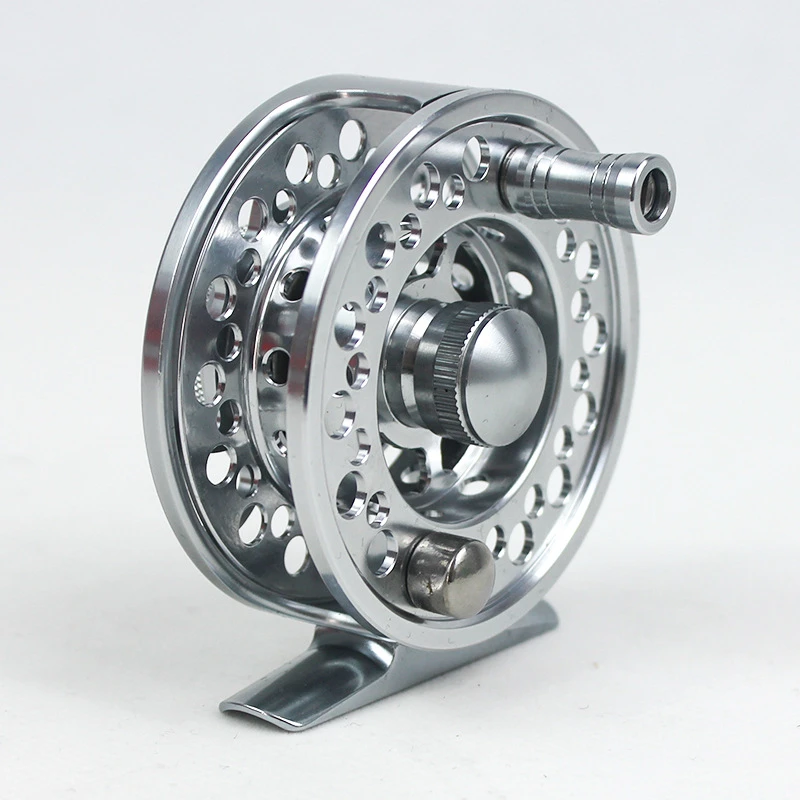
Explore WH Fishing CNC Fly Reels:
3. How CNC Fishing Reels Are Manufactured
CNC reel manufacturing involves more than placing an aluminum workpiece inside a machining center.
A typical production process includes engineering review, machining preparation, material processing, dimensional inspection, finishing, and assembly.
The exact sequence varies according to the reel model and component design.
Step 1: Engineering Drawings and Design Review
Manufacturing begins with component drawings and technical requirements.
Engineers define the required geometry, mechanical interfaces, material specifications, and critical dimensions.
For an existing OEM reel platform, the review focuses on which modifications can be made while maintaining compatibility with the original mechanical structure.
For a new design, additional engineering evaluation may be required.
Step 2: CNC Programming and Machining Preparation
Approved drawings are translated into machining instructions using suitable CAD/CAM processes and CNC programming.
The manufacturing team plans:
- Machining operations
- Cutting tools
- Workholding and fixtures
- Machining sequence
- Critical inspection points
These decisions influence manufacturing efficiency, dimensional consistency, and production costs.
Step 3: Aluminum Workpiece Preparation
Suitable aluminum workpieces are prepared according to the component design and material requirements.
For a solid CNC-machined reel frame, cutting tools remove material from the starting workpiece to form the required structure.
Different components may require different alloys or manufacturing routes.
The material specification should therefore be confirmed for each relevant component.
Step 4: CNC Machining
The workpiece is machined through programmed cutting operations.
Watch our actual CNC machining process, where solid aluminum billets are transformed into fishing reel frame components according to engineering drawings and CNC programs.
Depending on the design, these may include:
- External profile milling
- Internal cavity machining
- Bearing-seat machining
- Drilling and threading
- Structural cutouts
- Finishing of mounting and assembly surfaces
Complex reel frames may require multiple setups and machining operations.
The amount of material removed, machining complexity, and required accuracy all influence production time.
Step 5: Dimensional Inspection and Surface Treatment
Machined components are inspected according to their technical requirements.
Critical mechanical interfaces may require tighter dimensional control than decorative external features.
There is no single machining tolerance that applies to every component of every CNC fishing reel.
After machining, aluminum parts may undergo anodizing or other appropriate surface treatments.
Anodizing provides decorative finishing options and can improve certain surface properties, but it does not make a reel completely waterproof or immune to corrosion.
Step 6: Assembly and Functional Inspection
The machined parts are assembled with the required gears, bearings, drag components, fasteners, and other reel components.
At WH Fishing, finished reels undergo individual basic functional checks to verify normal operation.
Engineering validation of drag performance and other mechanical characteristics is conducted during development and testing.
This should not be confused with maximum-drag testing of every finished production reel.
4. CNC Machining vs. Die Casting: Which Is Better?
CNC machining and die casting are different manufacturing processes with different cost structures and design considerations.
Neither method is automatically superior for every fishing reel.
| Factor | CNC Machining | Die Casting |
|---|---|---|
| Manufacturing Method | Removes material from a solid workpiece | Forms metal inside a casting die |
| Initial Tooling | Requires machining programs, cutting tools, and fixtures | Requires dedicated casting tooling |
| Design Changes | Certain changes can be made through updated programs and drawings | Changes to cast geometry may require tooling modification |
| Material Usage | Can involve substantial material removal | Can be efficient for repeat production |
| Production Cost | Often higher for complex machined components | Often more economical at sufficient production volume |
| Typical Applications | Precision metal structures and premium reel platforms | High-volume and cost-sensitive product ranges |
Does CNC Machining Make a Fishing Reel Stronger?
Not automatically.
Mechanical strength depends on alloy properties, component geometry, wall thickness, structural design, and manufacturing quality.
A well-designed die-cast component may perform better than a poorly engineered CNC-machined component.
CNC machining offers precise control over geometry, but the design must still be suitable for the intended loads.
When Is CNC Machining the Better Choice?
CNC machining may be appropriate when a brand requires:
- Precision-machined structural components
- Distinctive aluminum reel designs
- Premium product positioning
- Selected frame or appearance customization
- An existing CNC reel platform suitable for OEM development
Die casting may be more appropriate for products where high production volume and lower unit cost are the main priorities.
The best decision depends on the product's technical requirements, expected order volume, and target market.
5. 6061 vs. 7075 Aluminum in CNC Fishing Reels
Aluminum alloy selection affects component strength, corrosion behavior, machining considerations, and cost.
Two commonly used aluminum alloys in CNC manufacturing are 6061 and 7075.
| Factor | 6061 Aluminum | 7075 Aluminum |
|---|---|---|
| Strength | Good general mechanical properties | Higher strength potential in comparable tempers |
| Corrosion Resistance | Generally better | Requires greater attention to corrosion protection |
| Material Cost | Generally lower | Generally higher |
| Machining Applications | Suitable for a wide range of components | Often selected where higher strength is required |
| Main Consideration | Balanced cost and performance | Higher strength with additional cost and material considerations |
Actual material properties depend on alloy temper and processing conditions.
Is 7075 Always Better Than 6061?
No.
7075 can provide higher strength than 6061 under comparable conditions, but it is generally more expensive.
It also requires careful consideration of corrosion protection, particularly for saltwater applications.
The difference in elastic stiffness between the two alloys is much smaller than their potential strength difference.
Therefore, replacing 6061 with 7075 does not automatically create a proportionately more rigid reel frame.
Material selection should be based on the component's intended function and mechanical design.
Can Different Alloys Be Used in the Same Reel?
Yes.
A fishing reel contains multiple components with different mechanical requirements.
A manufacturer may use different materials for frames, spools, gears, shafts, and handles.
For example, the CK series includes precision-machined aluminum frames and selected 7075 aluminum components.
Buyers should confirm the exact material used for each important component rather than assuming that every part uses the same alloy.
6. What Drives CNC Fishing Reel Manufacturing Costs?
CNC fishing reel prices can vary significantly even when two products have similar external appearances.
The difference often comes from the manufacturing process, component configuration, and production requirements rather than appearance alone.
6.1 Aluminum Material and Material Removal
CNC machining removes material from a starting workpiece.
A reel frame with deep internal cavities or extensive cutouts may require substantial material removal.
The cost is therefore influenced by both the starting material and the machining operations required to produce the finished part.
Material utilization and scrap management can affect production economics.
6.2 Machining Time and Component Complexity
CNC machining time is an important cost factor.
- Complex structures may require:
- Multiple machining setups
- Additional cutting operations
- Specialized fixtures
- More detailed dimensional inspection
- Longer machining cycles
A visually complex frame is not necessarily more expensive in every case, but additional machining requirements can increase cost.
6.3 Precision Requirements
Different component features require different levels of dimensional control.
Bearing seats, shaft interfaces, and critical mounting surfaces may need more precise machining and inspection than decorative surfaces.
Higher precision requirements can influence machining methods, inspection procedures, and production efficiency.
6.4 Surface Finishing
Anodizing and other finishing processes affect both appearance and manufacturing cost.
Color requirements, surface preparation, batch consistency, and cosmetic acceptance standards should be discussed before production.
Brands requiring consistent appearance across multiple production batches should confirm their expectations with the manufacturer.
6.5 Internal Mechanical Components
A CNC reel's cost is not determined by the frame alone.
Important cost factors may include:
- Gear materials and manufacturing methods
- Bearing specifications
- Drag-system components
- Spool construction
- Handle and knob materials
- Corrosion-resistant components
Two reels with similar CNC frames may have very different internal configurations and therefore different costs.
6.6 OEM Customization and Order Quantity
Customization costs depend on the changes requested.
Adding a logo or changing an available color may be more straightforward than developing a new frame geometry or modifying the gear system.
Production quantity also affects how setup work, machining preparation, and other costs are distributed across the order.
However, a higher quantity does not automatically make every customization technically feasible.
What Should Buyers Compare in CNC Reel Quotations?
Instead of comparing unit prices alone, ask suppliers to clarify:
- Which components are CNC-machined
- Material specifications for key parts
- Gear, bearing, and drag configurations
- Surface finishing requirements
- Customization scope
- MOQ and production lead time
- Additional engineering or setup costs
- Packaging and shipping terms
This provides a more meaningful comparison between quotations.
7. OEM Customization Options for CNC Fishing Reels
CNC machining can support distinctive product designs, but not every modification is equally straightforward.
For OEM sourcing, it is useful to divide customization into three levels.
Level 1: Branding and Cosmetic Customization
Depending on the reel platform, available options may include:
- Laser-marked logos
- Anodized colors
- Decorative accents
- Custom labels
- Branded packaging
These are often suitable starting points for brands developing their first private-label CNC reel range.
Level 2: Compatible Component Customization
Depending on the model, buyers may be able to evaluate changes to:
- Handles and handle knobs
- Spools
- Bearings
- Selected drag components
- External frame cutout patterns
- Compatible decorative metal parts
For CNC-machined frames, selected cutout or appearance changes may be achieved by revising drawings and machining programs.
However, the revised design must maintain critical mechanical interfaces and structural requirements.
Level 3: Mechanical Engineering Development
More complex requests may involve:
- Gear ratio modifications
- Drag-system redesign
- New mechanical layouts
- Revised internal component structures
- Development of a new reel platform
These projects require engineering evaluation and may involve additional development costs, sampling, and validation.
Why Start with an Existing CNC Reel Platform?
For many brands, an existing reel platform provides a more practical starting point than developing a completely new mechanical system.
The buyer can first evaluate the reel's:
- Basic mechanical performance
- Construction quality
- Weight and ergonomics
- Component configuration
- Suitability for the target market
Once the platform is approved, suitable OEM customization can be discussed.
This helps separate essential technical requirements from optional cosmetic changes.
Discuss Your CNC Fishing Reel OEM Project
Share your intended reel type, target specifications, customization requirements, and estimated order quantity with WH Fishing to evaluate a suitable product platform.
8. OEM Sourcing and Sample Evaluation Process
A structured sourcing process reduces uncertainty and helps buyers move from initial product selection to approved mass production.
Step 1: Define the Product Requirements
Identify the target market and fishing application.
Provide the required reel type, size, gear ratio, drag characteristics, weight range, and other relevant specifications.
A reference product can help communicate the intended market positioning.
Step 2: Select a Suitable Reel Platform
Review existing models before requesting new mechanical development.
Determine which standard configurations already meet the essential requirements.
Step 3: Evaluate Samples
Sample testing should reflect the reel's intended use.
Depending on the product category, evaluation may include:
- Retrieval smoothness
- Gear operation
- Drag engagement and consistency
- Casting performance where applicable
- Spool operation
- Handle ergonomics
- Assembly quality
- Suitability for the intended fishing environment
Buyers should establish appropriate acceptance criteria before approving a production configuration.
Step 4: Confirm Customization Requirements
After sample evaluation, confirm which changes are required.
Separate branding and appearance modifications from changes affecting mechanical components.
This allows the manufacturer to assess feasibility and provide a more accurate quotation.
Step 5: Review Commercial Terms
Before production, confirm:
- Unit price
- MOQ per model
- Customization costs
- Sample and development charges
- Packaging requirements
- Estimated lead time
- Payment terms
- Shipping arrangements
MOQ and production schedules vary by model and customization scope.
For established CNC reel models, buyers should generally allow approximately 70 days for mass production after final specification approval and deposit receipt, excluding shipping time.
Step 6: Approve the Final Production Configuration
Before mass production, confirm the approved specifications, appearance, packaging, and inspection requirements.
Any subsequent changes should be reviewed for their effect on cost, compatibility, and production scheduling.
9. How to Evaluate a CNC Fishing Reel Manufacturer
A supplier's CNC machining capability is important, but it is not the only factor that determines whether the supplier is suitable for an OEM project.
Established fishing brands should evaluate the manufacturer's ability to deliver consistent finished products.
Verify Manufacturing Evidence
Ask which components are CNC-machined.
Review actual machining photographs, production videos, and component information where available.
Manufacturing evidence should support the supplier's claims rather than simply repeat marketing descriptions.
Confirm Materials and Component Specifications
Request clear information about important components.
Material claims should identify the relevant part instead of suggesting that the entire reel uses one alloy.
Evaluate the Complete Mechanical System
Review the frame, gearing, bearings, drag system, spool, handle, and assembly together.
The complete reel should meet the intended application requirements.
Understand Quality-Control Procedures
Ask how machined components and finished reels are inspected.
It is important to distinguish routine production checks from development-stage mechanical validation.
At WH Fishing, finished reels undergo individual basic functional inspection. Maximum-drag testing is not performed on every finished reel.
Assess OEM Communication and Engineering Feasibility
A suitable manufacturing partner should clearly explain:
- Which customizations are available
- Which changes require additional engineering
- Which specifications need confirmation
- Applicable MOQ requirements
- Sampling and production schedules
Clear technical communication helps prevent misunderstandings before mass production.
Compare Total Procurement Cost
Consider the complete sourcing cost, including product configuration, customization, packaging, engineering charges where applicable, and shipping.
A lower quoted unit price does not necessarily represent a better overall procurement decision.
Frequently Asked Questions About OEM CNC Fishing Reels
1. What is the minimum order quantity for custom CNC fishing reels?
MOQ depends on the reel model and customization requirements. For selected existing CNC reel platforms, orders may start from 100–200 pieces per model, while other configurations may require higher quantities. Custom mechanical development and special components are evaluated separately. Contact WH Fishing with your selected model and estimated quantity for confirmation.
2. How long does it take to manufacture OEM CNC fishing reels?
For established CNC reel models, the typical mass production lead time is approximately **70 days** after the final specifications are approved and the deposit is received. This is an estimated production period and does not include international shipping. New mechanical development, special materials, or complex customization may require additional time.
3. Can we customize the reel's logo, color, handle, spool, and packaging?
Yes. Depending on the model, WH Fishing can support custom logos, anodized colors, handle and knob options, compatible spool configurations, and branded packaging. Changes to frame cutout patterns or internal mechanical components require technical evaluation to confirm compatibility and manufacturing feasibility.
4. Can we order samples before placing a bulk order?
Yes. We recommend evaluating an existing standard reel sample before proceeding with OEM customization. This allows buyers to assess the reel's construction, operation, and suitability for their target market. Sample availability, pricing, and preparation time depend on the selected model.
5. Can you develop a CNC fishing reel based on our drawings or reference samples?
We can review technical drawings, reference samples, and proposed product specifications to assess manufacturing feasibility. Cosmetic modifications and compatible component changes are generally more straightforward than developing an entirely new mechanical system. Projects requiring new gears, drag mechanisms, or structural designs need separate engineering evaluation, development planning, and cost confirmation.
6. What factors affect the wholesale price of CNC fishing reels?
The main factors include reel size, aluminum materials, CNC machining complexity, machining time, gear and bearing specifications, drag components, surface finishing, customization requirements, and order quantity. To receive an accurate quotation, buyers should provide the intended reel model, technical requirements, and estimated purchasing quantity.
7. How do you ensure consistent quality during CNC reel production?
Quality control includes inspection of relevant machined dimensions, component compatibility, assembly, and finished-reel operation. At WH Fishing, finished reels undergo individual basic functional checks. Drag performance and other mechanical characteristics are evaluated during product development and validation; maximum-drag testing is not performed on every finished reel.
8. Can you supply replacement parts for OEM CNC fishing reels?
Replacement parts such as compatible spools, handles, handle knobs, and selected internal components can be discussed according to the reel model and production configuration. Availability, pricing, and minimum quantities should be confirmed before ordering, especially for customized components.
Conclusion: Choosing the Right CNC Fishing Reel Manufacturing Partner
CNC machining offers fishing tackle brands opportunities to develop precision-machined metal reels with distinctive designs and suitable OEM configurations.
However, the CNC manufacturing process alone does not determine the quality or performance of a finished fishing reel.
Successful sourcing requires evaluating the complete mechanical design, component materials, machining requirements, assembly quality, customization feasibility, and commercial terms.
WH Fishing provides CNC reel platforms across spinning, baitcasting, conventional and jigging, and fly fishing categories.
For brands and importers, an efficient approach is to evaluate an existing product platform, confirm the required performance characteristics, and then develop suitable OEM customization.
Request an OEM CNC Fishing Reel Quotation
To discuss your project, please provide:
- Reel Type: Spinning, baitcasting, conventional/jigging, or fly reel.
- Target Specifications: Size, gear ratio, drag requirements, weight, and fishing application.
- Customization: Logo, color, packaging, component changes, or mechanical development.
- Estimated Quantity: Expected order quantity per model.
- Destination Market: Country or region where the products will be sold.
WH Fishing can review your requirements and discuss suitable existing platforms, customization feasibility, sampling, and quotation details.
Request a CNC Fishing Reel Quotation